Co-Parenting After Divorce
Commonly, everyone feels wounded after a divorce. The divorced parents are going through feelings of failure, rejection, abandonment and loss. The children have similar feelings. All these hurt feelings lead to competitiveness, drama and recriminations. Divorced parents, in sharing custody, can retaliate against each other by making visitation difficult, bad-mouthing the other parent (or the new partner or step-parent) to the children, withholding child support and trying to get the children to deliver inappropriate messages to the other spouse, like "mommy says you didn't dress us right"
Divorced parents can avoid these scenarios by using the following guidelines:
*Don't React, Respond: When the other parent does something upsetting, take time to cool down before responding, and respond with a possible solution.
* Talk about It to safe people: Talk to other couples, to a therapist, to friends and to family to create more understanding and brainstorm about options. If you can find other couples who have resolved divorce differences, find out what they decided. Let off steam to safe people, so your children don't experience your anger and frustration.
* Explain Your Ex’s Point of View: When talking about it to each other, or to someone else who is supportive, explain each other’s point of view, which will help you understand.
* Focus on Your Children: Keep your focus on what would be best for your children, and if they are old enough to understand, bring them into the discussion. Don't try to persuade them to either side, but present the options as objectively as you can, and find out what your children think about it.
* Experiment: Be willing to try some experiments. Try it the way the other parent wants it, to see if it works. Try letting the children decide how they want it to be, within reason.
* Avoid Right/wrong Discussions: Arguing about who is right or wrong will not solve anything. Instead, work on understanding what is important to each of you, then finding a way to incorporate that and resolve your differences. Focus on the problem only long enough to understand what it is, then switch the focus of your discussion to what will work, and what will solve the problem that both of you can live with your mutual decision.
* While the kids are small, still do some family activities with all of you together.
The most successful strategies in salvaging a co-parenting relationship after divorce
1. Calm down.
Couples often feel panicked when something goes wrong with co-parenting. Understand that problems are just opportunities to learn and grow, and to find a new and exciting way to do things. You can't think when you're upset, so don't talk when you are. Take a moment to calm down, take a deep breath, and talk rationally about what's going on. Any problem can be fixed, if you both focus on finding a solution.
2. Avoid drama.
Some parents create a lot of drama: fighting, cold silences, leaving and returning, court battles, child custody problems and financial struggles. Drama of that type is never necessary; it's a result of adults acting like upset children. Avoid dramatic pronouncements, scenes and ultimatums when problems arise. Instead, learn to sit down as an adult, and talk about what the solution might be; think and act as you do at work when a problem arises – most people can't throw fits and keep their jobs.
3. Get counseling.
When my husband and I first married, in 1982, we made a deal: If we couldn't solve a problem on our own in three days, we'd go for counseling. In the first few years, we had a few sessions, which were very helpful in teaching us how to be effective with each other. All these years later, we are happy and haven't needed counseling in many years. If you’re struggling with your ex, getting counseling for yourself will give you strategies to help you co-parent better with your ex.
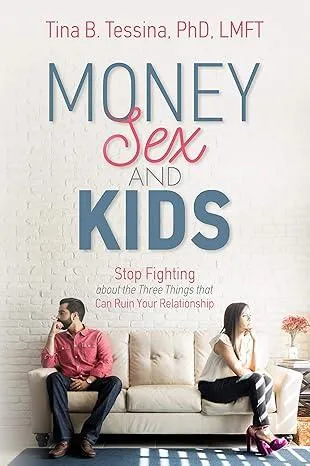
Adapted from: Money, Sex and Kids: Stop Fighting about the Three Things that Can Ruin Your Relationship 2nd Ed
Tina B. Tessina, Ph.D. (www.tinatessina.com) is a licensed psychotherapist in S. California since 1978 with over 45 years’ experience in counseling individuals and couples and author of 18 books in 17 languages, including Dr. Romance’s Guide to Finding Love Today; It Ends With You: Grow Up and Out of Dysfunction; The Ten Smartest Decisions a Woman Can Make After Forty; The Real 13th Step , How to Be Happy Partners: Working it Out Together; How to Be a Couple and Still Be Free, Money, Sex and Kids; 52 Weeks to Better Mental Health, and her newest, Stop Overthinking. She writes the “Dr. Romance” blog and the “Happiness Tips from Tina” email newsletter. Online, she’s known as “Dr. Romance” Dr. Tessina appears frequently on radio, TV, video and podcasts. Find everything at https://tinabtessina.my.canva.site/bio-link


